How to Source Reliable Travel Perfume Bottles: A Technical Procurement Guide
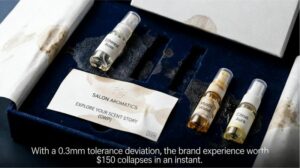
In the travel fragrance sector, a “minor” packaging flaw is never minor. For a sourcing manager, a 0.5mm deviation in neck tolerance or a substandard gasket material doesn’t just result in a leak—it results in catastrophic brand erosion, expensive product recalls, and the loss of high-value retail partnerships.
As global mobility increases, the demand for travel perfume bottles (30ml and under) is surging. However, the market is saturated with low-grade “wholesale” glass that fails under cabin pressure shifts. This guide breaks down the technical imperatives for sourcing professional-grade refillable perfume bottles that protect your formulation and your reputation.
I. The “Pressure Crisis”: Why Standard Glass Fails
Most procurement failures occur because buyers treat travel sizes as miniature versions of standard bottles. They are not. A travel perfume bottle must be engineered for “Kinetic Durability.”
- Atmospheric Pressure Shifts: During air travel, the pressure differential between the bottle’s interior and the cabin can force fragrance out of any seal that isn’t hermetically locked.
- Vibration Stress: Unlike a stationary vanity bottle, travel atomizers endure constant micro-vibrations in luggage that can loosen screw-cap closures over time.
- The Engineering Solution: You must prioritize the 15mm Bayonet (Crimp) Neck. This provides a mechanical, permanent seal that screw-necks simply cannot match in a volatile travel environment.
II. Critical Technical Specifications for Sourcing
When evaluating an empty perfume bottle from a manufacturer, move beyond aesthetics. Demand the following technical data:
1. Neck Finish Calibration (The FEA Standard)
The industry benchmark is the FEA 15 standard. A reliable manufacturer will guarantee a neck tolerance of ±0.15mm. Anything wider increases the risk of “pump wobble,” leading to primary seal failure.
2. Material Purity (Low-Iron Super Flint Glass)
Avoid recycled glass for high-concentration Extrait de Parfum. Recycled glass often contains trace metal oxides that can react with volatile fragrance compounds, causing “scent-shifting.” Specify Super Flint Glass to ensure the scent remains chemically inert and optically clear.
3. Annealing Quality (Stress Management)
Travel bottles are prone to impact. Ensure the manufacturer uses a standardized Lehr Annealing process to eliminate internal stress in the glass, drastically reducing the risk of shattering during transit.
Step-by-Step Leak-Proof Strategy
For OEM/Brand Managers, mastering the leak-proof challenge requires two perspectives:
III. Performance Comparison: Professional OEM vs. Generic Wholesale
| Technical Feature | Professional OEM Supply (e.g., XB477 Series) | Generic Market Wholesale |
| Neck Tolerance | Strict ±0.15mm (Laser Verified) | Loose ±0.50mm or higher |
| Closure System | 15mm Professional Crimp (FEA 15) | Standard Screw or Press-fit |
| Glass Grade | Super Flint (Optical Grade Clarity) | Soda-lime (Visible Green/Yellow tint) |
| Leakage Testing | Vacuum Chamber Tested (-0.05MPa) | Visual Inspection Only |
| Chemical Stability | Inert (Scent-Potency Protected) | Risk of pH Reactivity |
IV. Vetting Your Manufacturer: The Technical Checklist

To ensure supply chain reliability, use this technical checklist to vet your bulk perfume bottle supplier:
- Tooling Plan Verification: Does the factory own the specific molds (e.g., XB477 or XB183), or are they a middleman? Direct mold ownership implies superior batch-to-batch consistency.
- Compliance Audit: Demand REACH, RoHS, and ISO 9001:2015 certifications. This is non-negotiable for entering EU or US retail markets.
- Vacuum Stress Testing: Don’t just look at the bottle. Test the refillable perfume bottle by filling it with a 15% alcohol solution and placing it in a vacuum chamber for 30 minutes. If it weeps, the batch is a liability.
V. Conclusion: The High Cost of Cheap Glass
Sourcing a small perfume bottle is an exercise in risk management. Saving $0.05 per unit on a generic bottle can lead to a 5% leakage rate—a cost that far outweighs the initial savings when factoring in returns and damaged brand reputation.
Prioritize 15mm bayonet systems, demand ±0.15mm tolerances, and only partner with manufacturers who provide transparent technical data. In the fragrance world, the bottle is the guardian of the brand. Choose wisely.